

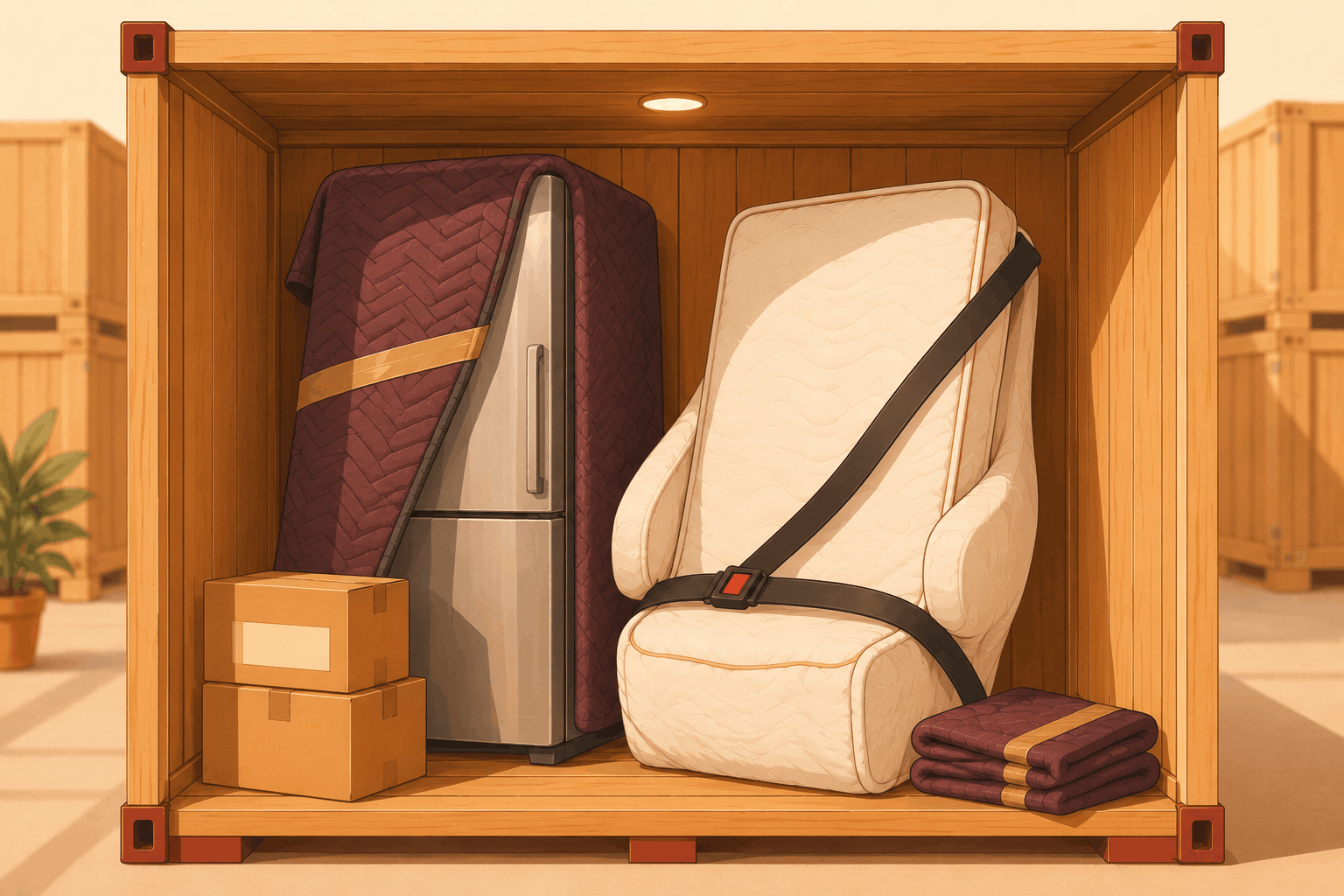
First of all
Storing household appliances and mattresses: why preparation matters more than the storage facility
Even the best warehouse in the world can’t save a fridge that was damp when it arrived. The wood in the containers may be treated against pests, there may be ventilation grilles, security surveillance and even locks, and yet your furniture will still come out with stains if you haven’t done your bit. Because mould, rust and dents aren’t picked up on the way: they’re brought from home.
A good service from self-storage in Málaga It takes care of the tricky bit: storage, preservation and security. The other half — the part that determines whether you get your belongings back in one piece — is this, and hardly anyone bothers to explain it to you.
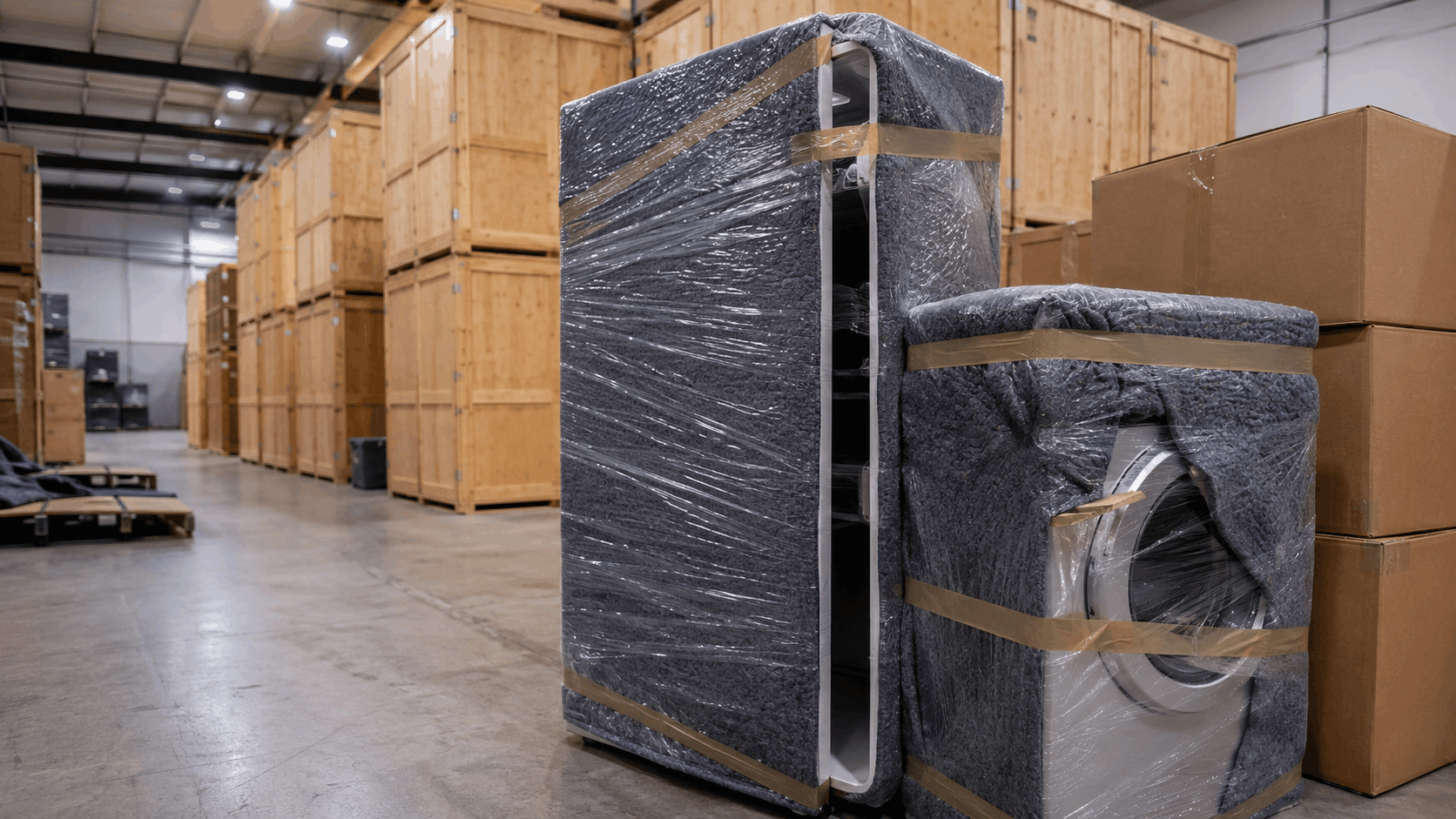
Preparing household appliances before storing them
A job well done starts 48 hours before you move a single thing. Every appliance has its own quirks, but they all share the same rule: they must be empty, dry and clean. Skip any one of these three and you’ll pay the price in the form of rust, mould or that unmistakable smell of a forgotten cupboard. And if you’re still not sure how much you’re going to store, work it out beforehand how many cubic metres do you need It saves you from paying too much or not paying enough.
48 hours
Unplug the fridge before moving it
72 hours
rinse cycle with the washing machine empty
45°
maximum tilt of the fridge
0
remove any remaining water before storing
The fridge and the freezer
Unplug it 48 hours beforehand so that it defrosts and drains completely. Empty it, remove the trays and drawers, and give the inside a quick wipe with bicarbonate of soda. Here’s a tip that hardly anyone follows: leave it inside the bin with the doors slightly ajar; if it’s closed and damp, it’ll turn into a mould-breeding ground in a matter of days. And always move it upright: the oil in the compressor won’t forgive it if it’s tipped over. Before plugging it back in, it’s best to let it stand for a while, following the manufacturer’s instructions.
The washing machine and the dishwasher
Run an empty rinse cycle and let the drum drain out all the water. Disconnect and empty the inlet and drain hoses – those big traitors that always hold onto a bit of water to drip out. Dry the drum, the door seal and the filter thoroughly, reattach the transport bolts if you’ve kept them, and store the machine with the door left slightly ajar.
Small household appliances
Microwaves, food processors, coffee machines and blenders are the easiest items to pack, but they all require the same thing: they must be clean and dry. Pack them in a snug-fitting cardboard box, wrap them in a thin blanket, fill any gaps with paper, and put the cables in a labelled bag. That way, you’ll save yourself the hassle of digging through everything when it’s time to return them.

The mattress, without losing its shape
The mattress is the item that ages the worst when stored haphazardly, and the one surrounded by the most myths. Search online to find out how to store it, and you’ll come across two camps locked in a bitter dispute. The sensible answer is simply neither of the two: It depends on the material and the time.
Foam · latex · memory foam
Horizontally
On a flat surface that distributes the weight. When you stand on them, they give way and bend, and memory foam has a vindictive memory: once it becomes deformed, it doesn’t spring back.
Spring mattress
Vertically
Leaning against the wall, it stands up well when placed on its side. That said, it’s a good idea to rotate it every now and then so that the structure doesn’t warp on the same side all the time.
Golden rule: Never place anything heavy on top of it, whatever the material. A mattress that has been crushed under boxes for months will end up with permanent dents. And if it’s an inflatable mattress, deflate it completely.
The right cover and humidity control
Forget about airtight plastic and old sheets. You need a breathable mattress cover: it protects against dust and dust mites, but allows the mattress to breathe so that moisture doesn’t build up inside. Sealing it up tight is a sure-fire way to encourage mould, especially with the Mediterranean humidity that’s ever-present here – something we take for granted in these parts and which we cover in depth in our guide on how to protect furniture from the damp on the Costa del Sol.
40–60 %
ideal relative humidity
15–25 °C
moderate temperature, neither attic nor cellar
After it’s been stored away for a while, leave it to air out for a couple of days before using it again. If it still smells musty, a bit of bicarbonate of soda, a few hours’ patience and a quick hoover will leave it as good as new.
Five mistakes that ruin everything
After years of collecting and returning containers across the county, the damage we find when retrieving items recurs with an almost comical predictability. These five are, by far, the ones we see most often, and the easiest to avoid:
Leave water in the fridge or washing machine. Mould and a musty smell are guaranteed.
Wrapping electrical appliances or mattresses in airtight plastic, which causes condensation to build up inside and leads to rust or mould.
Leaving a foam mattress standing upright for months, or piling a tower of boxes on top of it.
Tilting the fridge too far and plugging it in straight away after bringing it back in, without allowing the compressor to settle.
Choose a damp, unventilated corner rather than a container designed for long-term storage.
Frequently Asked Questions
Can a fridge be laid on its side for storage or transport?
The correct way is to move it and store it upright, as the oil in the compressor may shift and damage the cooling system. If you have no choice but to tilt it, do not exceed 45 degrees and, when you set it upright again, leave it standing for several hours before plugging it in so that the oil can settle back into place.
How far in advance should I switch off the fridge before putting it into storage?
At least 48 hours before moving it. This allows it to defrost completely, drain out all the water and dry out inside. It is then a good idea to clean it with bicarbonate of soda and leave the doors slightly ajar whilst it is in storage, to prevent mould from forming and to avoid a musty smell.
How do I prepare the washing machine before putting it away?
Run a rinse-only cycle about three days beforehand and let the drum drain out the water. Empty the machine and disconnect the inlet and drain hoses, dry the drum, the door seal and the filter, and refit the transport bolts if you have kept them. Store it with the door left slightly ajar.
In what position should a mattress be stored to prevent it from losing its shape?
For long-term storage, foam, latex or memory foam mattresses should be laid flat on a level surface, so that the weight is distributed evenly and they do not bend. Spring mattresses hold up better when stored upright against a wall, and should be rotated from time to time. The general rule is: never stack anything heavy on top of them.
What sort of cover should you use to store a mattress?
A breathable cover – never use airtight plastic or sheets. A breathable cover protects against dust and dust mites whilst allowing the mattress to breathe, preventing moisture from building up inside. Sealed plastic causes condensation to form inside and encourages mould growth, which is a greater risk given the high humidity typical of coastal areas.
How long can a mattress be stored for?
It can last for months or even years if the following conditions are met: it is positioned correctly, has a breathable cover, has no weight resting on it, and is kept in an environment with a humidity level of between 40 and 60 per cent. It is a good idea to check it every few months, air it out and turn it over so that it does not always rest on the same side.
How can I prevent mould and unpleasant odours when storing furniture?
Everything is stored clean and completely dry; nothing is sealed in airtight plastic, and the space is well-ventilated with controlled humidity. Leaving the doors of household appliances slightly ajar, using breathable covers and choosing a well-ventilated storage unit rather than a damp storage room makes all the difference, especially in a coastal climate.
How can I protect household appliances on the coast from salt spray?
The marine environment accelerates the oxidation of stainless steel. Before storing them, dry them thoroughly and apply a thin layer of mineral oil or a specific protective coating, then wrap them in a blanket or breathable film – never in sealed plastic. Storing them indoors in a well-ventilated area greatly reduces exposure to salt spray compared to an open-air garage.
About the author
The La Seda Removals and Storage Team organises removals and storage in Málaga and on the Costa del Sol, with its headquarters on the Carretera de Cádiz. This article outlines the practices we follow on a daily basis when collecting, storing and returning our customers’ belongings within the province.
Keep getting ready for your move


 Spanish
 English