


Self-storage · Costa del Sol · Practical guide
When the sea seeps into your wardrobe. How to protect your furniture from damp on the Costa del Sol
In September, you open the cupboard you closed in June and are met by a musty smell, a dark stain and a drawer that no longer slides. It’s not just bad luck: on the Malaga coast, the average annual relative humidity is around 65 per cent, and from October to December it rises above 70 per cent – higher than the 60 per cent considered safe. Knowing protect furniture from damp It’s better to recover them intact than to pay for a restoration.
Why is the Costa del Sol so hard on furniture?
We say this without exaggeration: the climate they keep touting as the perfect place to live is incredibly tough on a sideboard. Málaga has coastal Mediterranean climate (the famous CSA): mild in winter, hot in summer and humid almost all year round. When it comes to wood, that constant dripping does more damage than an occasional downpour.
65 per cent
average annual relative humidity
72 per cent
at its peak, in Nov–Dec
9 / 12
months above 60 per cent
60 per cent
the safe limit for furniture
And then there’s the sea. The air from the Alboran Sea is laden with salt, which is hygroscopic (attracts water) and, incidentally, causes screws and hinges to rust. In the Axarquía, Rincón de la Victoria, Benalmádena or the coastal strip of Torremolinos and Vélez-Málaga, this is noticeable sooner than further inland; only the Guadalhorce river valley fares slightly better.
The land breeze dries out the air for a few hours and throws you off; then the sea breeze returns and the humidity comes back. These fluctuations between swelling and shrinking eventually come to an end causing the joints to open and the wood to crack.
📅 Month-by-month humidity in Málaga (AEMET data)
Jan
69 %
Feb
68 %
Sea
67 %
Apr
63 %
May
59 %
Jun
58 %
Jul
58 %
Aug
61 %
Sep
65 %
Oct
70 %
Nov
71 %
Dec
72 %
Average relative humidity by month · season at Málaga Airport, AEMET (1981–2010). In terracotta, the months exceeding the recommended 60 per cent: 9 out of 12. Only May, June and July fall below that threshold.
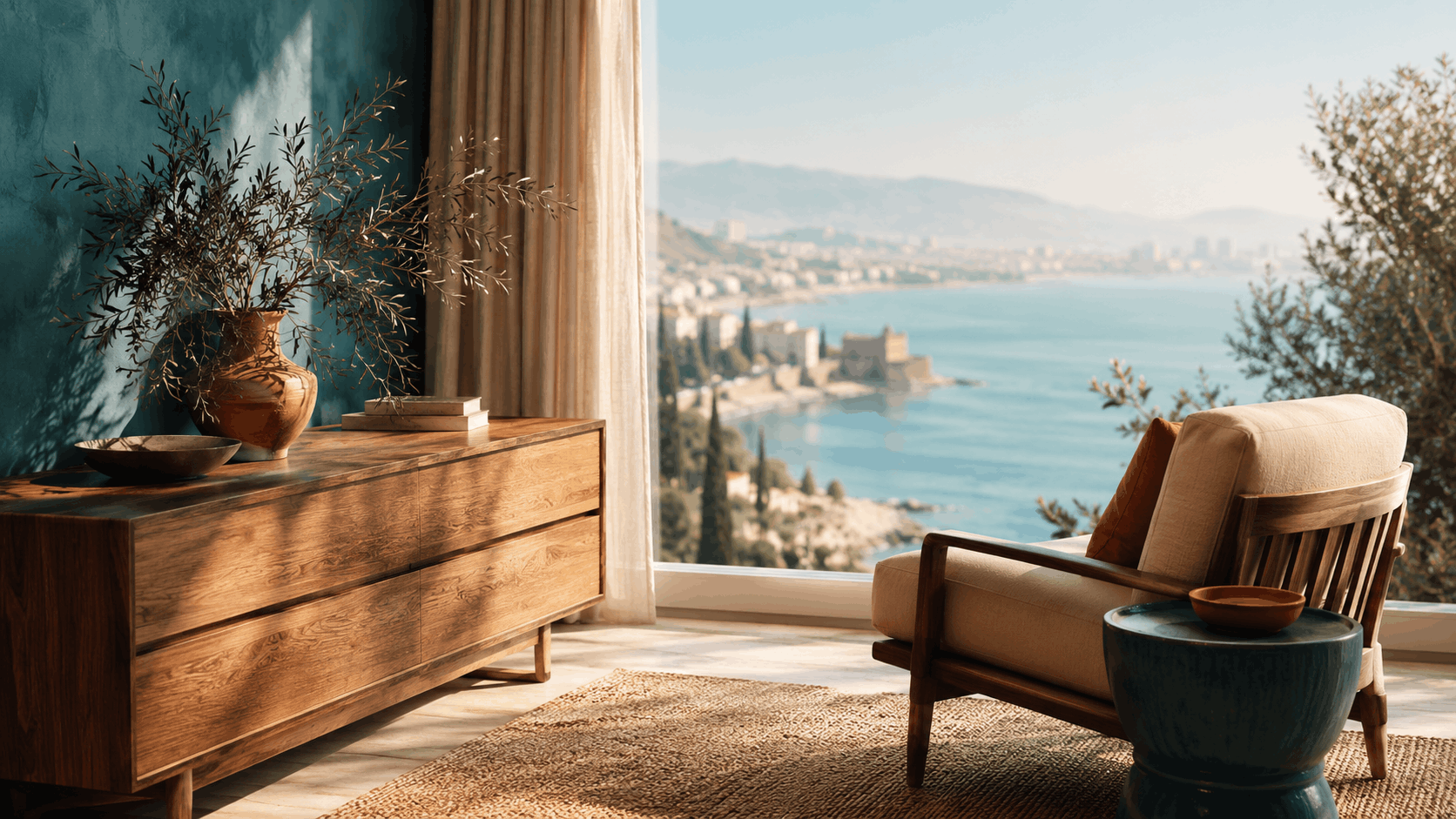
How does damp affect furniture (and how to spot it in time)
Damp doesn’t shout, it whispers: a musty smell, clothes that feel cold to the touch, little stains on the back, a spot of rust, a drawer that’s hard to open. By the time you notice it, it’s been there for weeks. Mould just asks for humidity above 60 per cent, darkness and a moderate temperature: the inside of a closed, unventilated piece of furniture, basically.
The three types of mould you’re most likely to come across
The black one is the most toxic; the white one eats away at the lignin inside porous wood; the greenish one is the first to appear. All three release spores that trigger allergies, so it’s about health, not just appearance.
And every material has its own way of failing: solid wood warps, the melamine warps at the edges and the upholstery becomes a breeding ground for dust mites.
Prepare the furniture before putting it away
A word of advice from those of us who load boxes: anything you pack in whilst damp will stay damp inside, trapped in a dark, enclosed space. Preparing your belongings beforehand is half the battle when it comes to preventing mould and ensuring your furniture doesn’t absorb damp – and it’s precisely the part that almost nobody gets right.
Wash them and leave them to dry thoroughly. Leave it out in the open for between 24 and 48 hours before covering anything. A piece of furniture that feels dry to the touch may still retain water in the joints.
Not a single damp item of clothing inside. All it takes is one T-shirt that’s only half-dry for the whole wardrobe to start smelling of damp within a few weeks.
Take apart whatever you can and empty the drawers. It takes up less space, is less prone to damage and allows air to circulate better. The screws, in labelled bags, which nobody ever remembers.
Give the wood a bit of a polish. A coat of wax or linseed oil creates a barrier against moisture and, at the same time, nourishes it from within.
Don’t store it whilst it’s still freshly varnished. A finish that has not yet cured traps moisture and takes months to dry out.
Measures that really do keep damp at bay
From here on, it all boils down to three steps: removing the furniture from the water, letting it breathe, and drying the air around it. The rest is just a matter of detail.
Pick them up off the floor
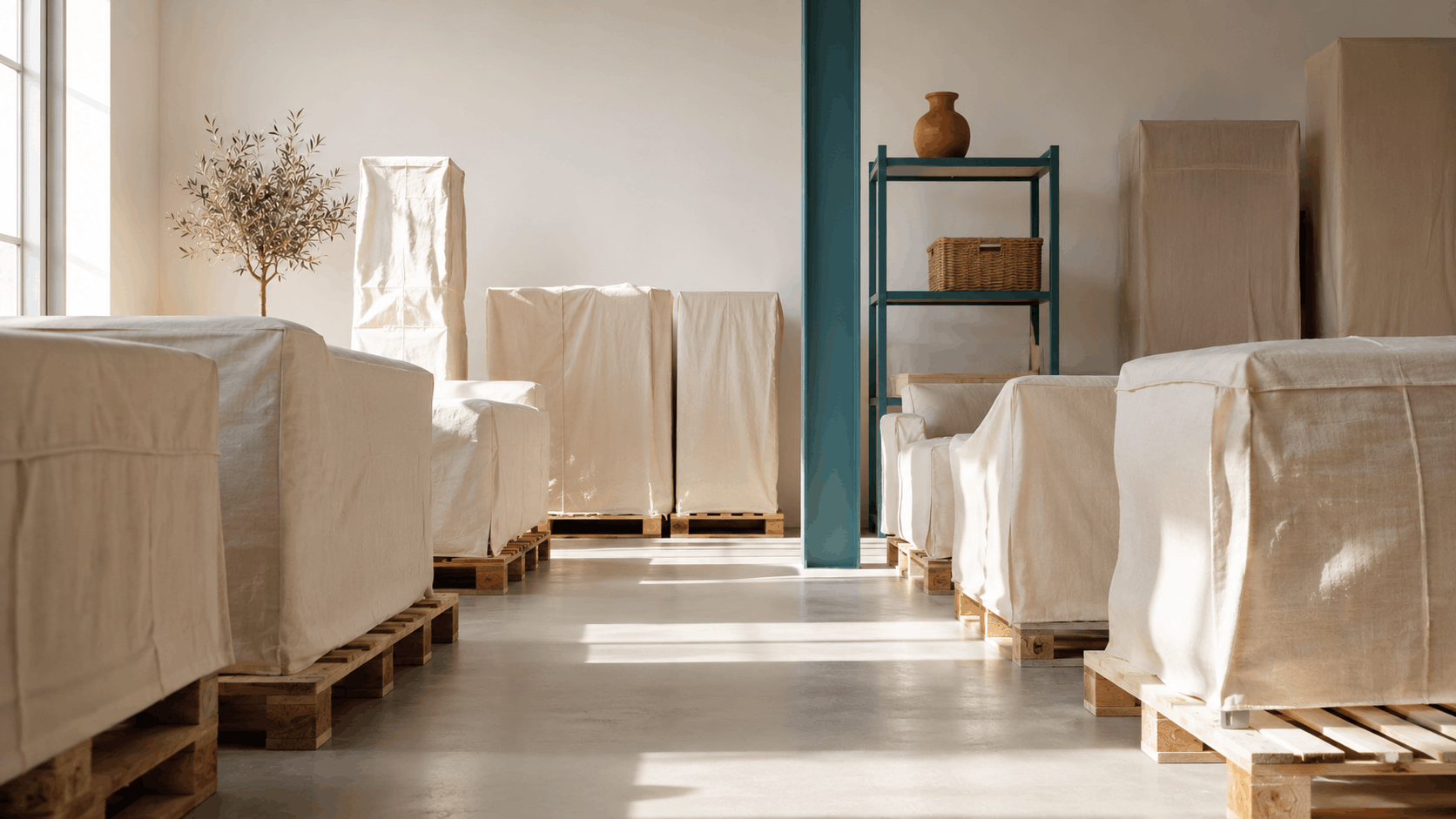
Moisture rises from the floor via capillary action, particularly on ground floors and in storage rooms close to the coast. Put pallets, a pallet Or, at the very least, a sheet of thick plastic with a piece of cardboard between the floor and the furniture. That two-finger gap prevents most mould from forming at the base, as it almost always starts from below.
Cover them, but let them breathe
Here’s the most costly and most common mistake in the neighbourhood: wrapping the furniture in airtight plastic. Beneath that plastic, the midday heat causes condensation to form in the early hours of the morning, and the water becomes trapped against the wood. The result: a mouldy greenhouse with your sofa inside. Use breathable covers, moving blankets or old cotton sheets, which keep out the dust whilst allowing air to circulate.
Dry out the air around it
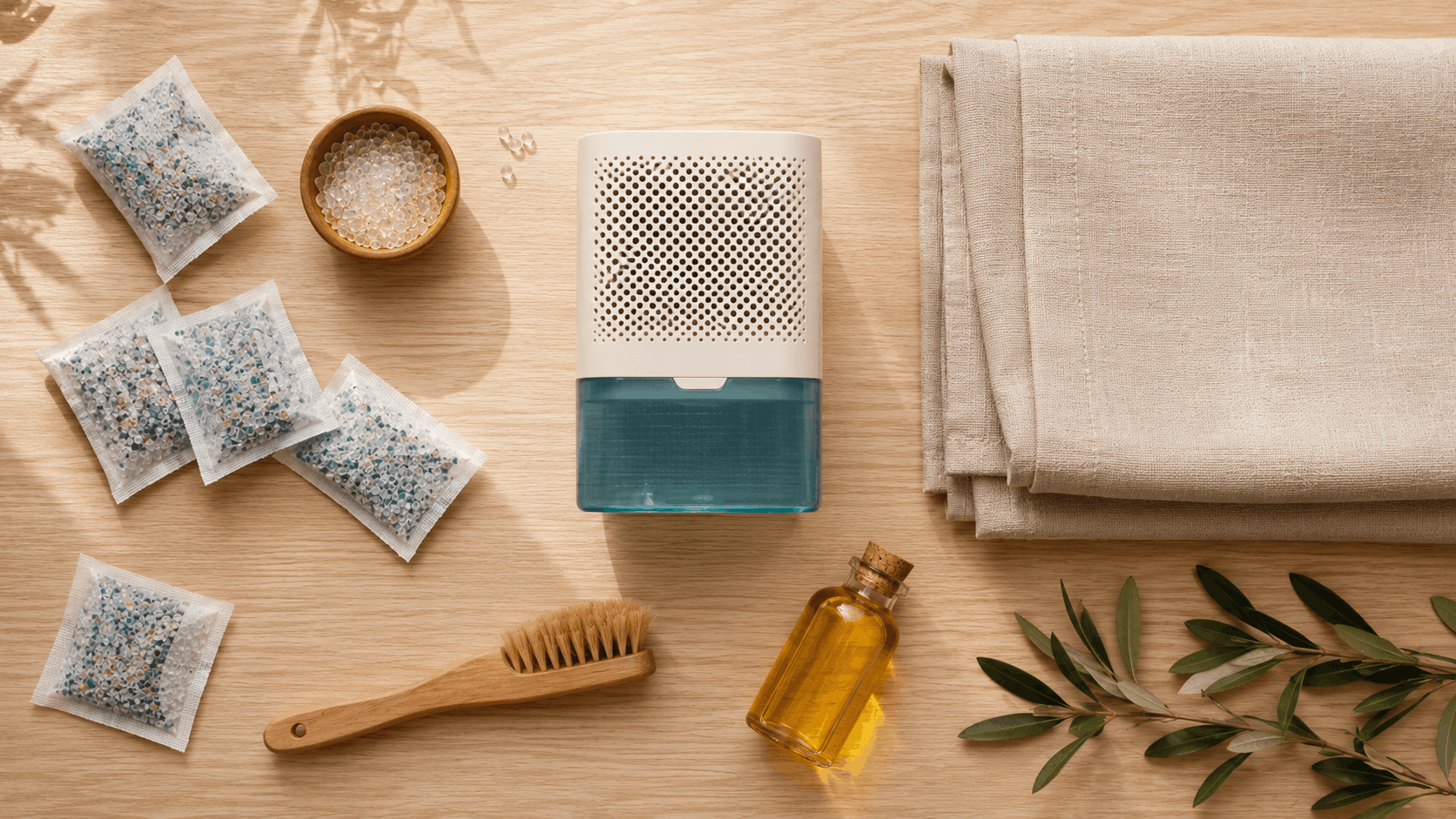
Distribute silica gel sachets in drawers and cupboards; they absorb moisture from the air and, when they are saturated, you dry them out and use them again. For an enclosed space, a electric or salt-based dehumidifier It keeps the humidity under control. And here are two tried-and-tested remedies that work: activated charcoal or bicarbonate of soda in open jars absorb moisture and odours without a single chemical. Space the items apart and don’t place them against the outer walls, as these are the ones where condensation builds up the most.
Every material has its own requirements
Wooden furniture isn’t looked after in the same way as a sofa or a mattress. Here’s a quick guide by material, so there are no excuses:
| Material | His Achilles’ heel | What to do |
|---|---|---|
| Solid wood | It swells, warps and opens at the joints | Linseed wax or oil, raised off the floor and a breathable cover |
| Upholstery and sofas | It retains moisture and attracts dust mites and moths | Store in a completely dry place, in a breathable bag, with silica gel nearby |
| Mattresses | It absorbs moisture and mould grows inside it | Flat, raised and never in sealed plastic packaging |
| Metal and fittings | Corrosion accelerated by sea salt | A layer of anti-rust coating or light oil, with silica gel sachets placed alongside |
| Leather | It dries out or goes mouldy depending on the humidity | Conditioner before storage and away from cold walls |
How long do they keep when stored, and when do you need to control the humidity?
If properly maintained and placed in the right spot, furniture can last for months or years. That’s the key It’s not the timetable, it’s the conditions. The healthy range is between 30 per cent and 60 per cent, and on the coast it doesn’t stay in place on its own.
✗ Garage or storage room at home
On the coast, the humidity rarely drops below 60 per cent. Without proper control, furniture is left at the mercy of the weather.
✓ Humidity-controlled room
Stable humidity and temperature all year round: the items are preserved just as they were on the first day.
For long stays or valuable items, a self-storage in Málaga with controlled facilities It neutralises moisture in the air, salt and temperature fluctuations. Previously, work out how many cubic metres you need: Packing things too tightly prevents air from circulating.
Whether at home or in a warehouse, the rule is the same: lifts it off the floor, allows it to breathe and dries out the air.
Is your furniture somewhere else in the county?
The same protection against damp, wherever you need it. We have storage facilities throughout the Costa del Sol:
Frequently Asked Questions
The most common questions we receive about damp and furniture, answered in a minute:
How can you protect furniture from damp when storing it?
Clean them and leave them to dry for between 24 and 48 hours, raise them off the floor onto pallets, cover them with breathable covers rather than airtight plastic, and remove moisture from the air using silica gel or a dehumidifier. On the Costa del Sol, it is also advisable to keep the pieces away from external walls and not to pile them up, so that air can circulate.
Why is it so humid in Málaga and on the Costa del Sol?
Due to the combination of a coastal Mediterranean climate and the proximity of the sea. The average annual relative humidity is around 65 per cent (AEMET data), rising above 70 per cent from October to December. The air from the Alboran Sea is laden with salt, which attracts water and causes it to settle on surfaces, accelerating the deterioration of furniture.
What is the ideal relative humidity for preserving furniture?
It is advisable to maintain the relative humidity between 30 per cent and 60 per cent. Above 60 per cent, mould has free rein to grow, and the Malaga coast exceeds this figure for much of the year. That is why it is worth drying out the air in the space where you store your furniture using silica gel, salts or a dehumidifier.
Is plastic suitable for covering furniture in storage?
Airtight plastic is counterproductive: it traps water vapour and causes condensation to form under the cover – exactly the kind of environment that mould thrives in. It is better to use breathable covers, removal blankets or cotton cloths, which keep dust out whilst allowing the furniture to breathe. Plastic is only suitable as an insulating layer between the floor and the item; it should never be used to wrap the entire piece.
What is silica gel used for when storing furniture?
Silica gel absorbs moisture from the air in enclosed spaces, such as drawers, cupboards or inside a cover. By placing several sachets around the furniture, you can keep the microclimate drier and reduce the risk of mould and unpleasant odours. It is also reusable: when it becomes saturated, simply dry it out and it will absorb moisture again.
How do I get rid of the musty smell from a piece of wooden furniture?
Air it out in a well-ventilated place and clean the surfaces with a mixture of equal parts water and white vinegar, which disinfects and neutralises the odour without damaging the wood. Dry it thoroughly afterwards, as the wood must never be left damp. If the odour persists, leave a bowl of bicarbonate of soda or charcoal inside for a few days.
How long can furniture be stored without getting damaged?
There is no fixed limit: if properly preserved and stored in a space with controlled humidity and temperature, they can remain in good condition for months or years. It is the conditions that matter, not the length of time. In a damp, unventilated environment, however, deterioration can set in within a few weeks, particularly in the case of wooden items and upholstered pieces.
Is a self-storage facility with humidity control better?
In a coastal climate like that of Málaga, it does make a difference. A professional facility with stable humidity and temperature levels keeps the environment within a safe range all year round, something that a garage or a private storage room can hardly achieve. For long-term storage or valuable items, our humidity-controlled storage facility It is the option that best preserves the furniture.

 Spanish
 English